

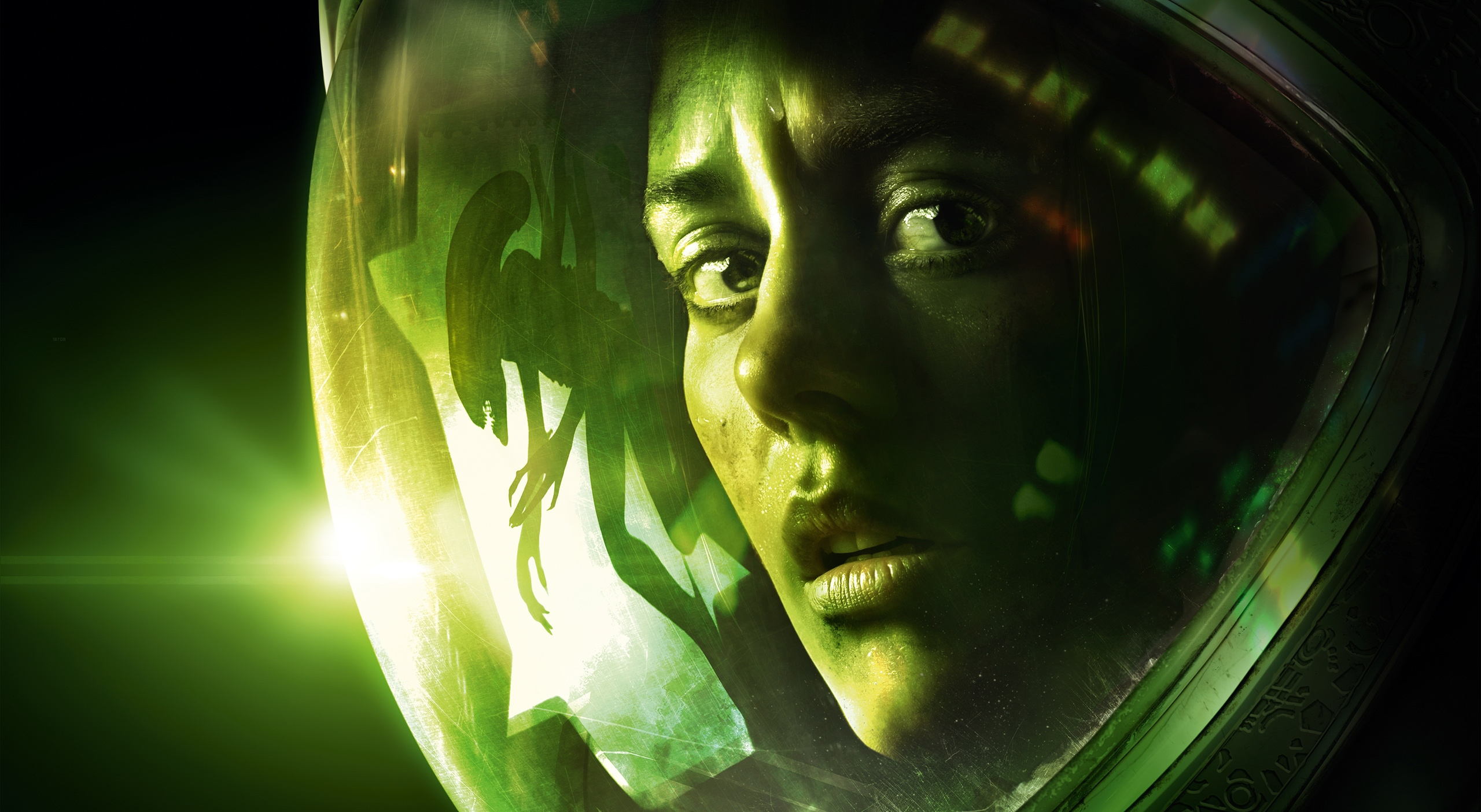
Turn the Lights Off First
Alien: Isolation is not a game you simply sit down and play. It’s a game you let into the room with you.
The lights are off. The house is quiet. The big screen is glowing in front of you, and the surround sound is carrying little noises from places you can’t see. A pipe knocks somewhere behind your shoulder. A vent rattles above you. Something metallic drags across the floor far away, or maybe not far enough away, and for a second you forget you’re holding a controller.
I first played Alien: Isolation on PS4, and it also runs on PS5 through backward compatibility. I’ve played it on Switch too, which is its own kind of miracle, but this game was made for the big screen in the dark. This is the version you play when you want the room around you to disappear. Or worse, when you want the room around you to feel like part of the station.
I’ve played Dead Space. I’ve played Outlast. I’ve played Resident Evil, The Evil Within, Alan Wake, and plenty of other horror games. I love this stuff, especially around Halloween. But Alien: Isolation is the one that got under my skin in a way the others did not. It didn’t just scare me. It made me nervous to move.
Prepare to be terrified.
This Is the Original Alien Movie Brought Back to Life
What makes Alien: Isolation so special is that it understands exactly which Alien movie it is trying to be. This is not the louder, more action-heavy world of Aliens, with marines, smart guns, and big heroic last stands. This is Alien from 1979. This is cold metal, bad lighting, cigarette-stained computers, and the terrifying idea that something perfect and impossible has slipped into the machinery with you.
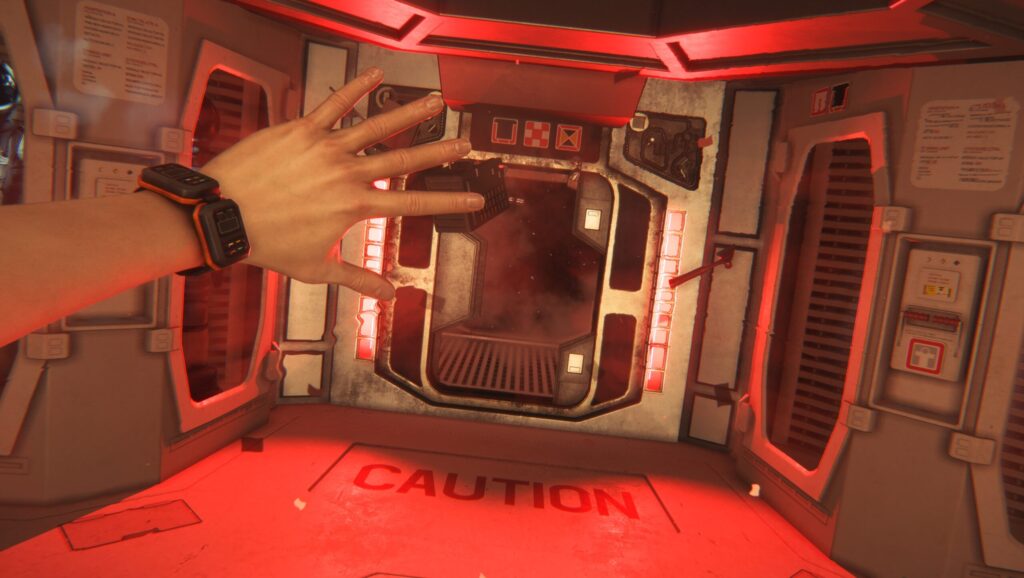
The visuals are incredible because they do not feel modern in the usual way. They feel old on purpose. Every room looks like someone built the future in the late 1970s and then never cleaned it. The computers have thick plastic frames and tiny green text. The walls are covered in panels, ducts, warning lights, and switches that look like they belong on a submarine. The station feels industrial, heavy, and exhausted. Nothing is sleek. Nothing is clean. Nothing looks safe.
That’s what makes it work. The game does not look like shiny science fiction. It looks like a place where people work long shifts, breathe recycled air, and try not to think too hard about what’s moving in the vents.
You walk through narrow corridors where the lights barely reach the floor. Steam rolls across doorways. Emergency strobes pulse against the walls. A monitor flickers in an empty room, and for half a second the reflection looks like something standing behind you. You turn too fast, because of course you do, and there is nothing there.
Wait. What was that sound?
Look at that wall over there, the one where the hallway turns left. Was there something there? You swear you saw something move just beyond the corner, not enough to know what it was, just enough for your brain to start filling in the rest. So you stop. You keep looking. The soft ringing in your ear gets louder, or maybe it’s the soundtrack, or maybe it’s the station itself winding up around you. The light flickers once. The corner is empty.
You still do not want to walk toward it.
That’s the game.
The Sound Is Where It Gets You
The sound in Alien: Isolation is not just good. It’s the reason the game works as well as it does.
This is one of the best sounding horror games ever made, and when you play it with surround sound, it becomes genuinely cruel. The music creeps in like a warning your body understands before your brain does. It does not always announce itself. Sometimes it’s just a low drone under everything, something sick and mechanical, like the station has a pulse and that pulse is getting faster.
Then there are the little sounds. Those are worse.
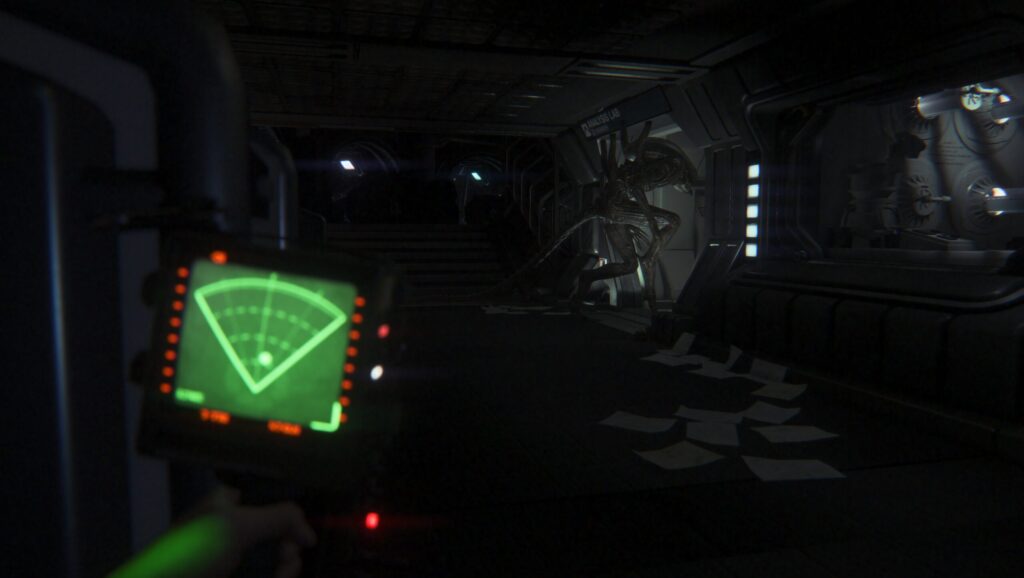
A loose chain somewhere in the dark. A door opening three rooms away. A hiss from the wall. A footstep, maybe. A vent cover shifting above you. The game teaches you to listen, and then it punishes you for listening too closely. You start hearing threats in everything. You freeze because a pipe expanded. You crouch because an elevator groaned. You stop breathing because the motion tracker clicked.
And then the game does the meanest thing it can do. It gets quiet.
Not silent, exactly. That would almost be easier. It leaves you with the thin hum of old machinery, the dry hiss of air moving through ducts, and that awful rising tone that feels like pressure building behind your eyes. You turn slowly. There is a hallway ahead. A red light pulses at the far end. The wall bends left. You know you need to go that way.
Then something moves at the edge of the screen.
Maybe.
You stop again. You stare. You keep staring until the ringing in your ears gets louder and the controller feels too loud in your hands. The corner is still empty, but now your mind has put something there. A shoulder. A tail. A slick black head pulling back into the dark. You didn’t see it clearly, but that almost makes it worse, because now you are walking toward a place your own brain has already haunted.
That’s Alien: Isolation at its best. It scares you with what is there, but it also scares you with what might be there.
This Is Not Dead Space, and That’s the Point
Dead Space is terrifying in a different way. I love Dead Space, but that game gives you tools. You’re scared, absolutely, but you can fight. You can cut limbs off. You can upgrade your gear. You can walk into a nightmare with a plasma cutter and at least convince yourself you have a chance.
Alien: Isolation takes that comfort away.
You’re not Isaac Clarke. You’re not a soldier. You’re Amanda Ripley, and most of the time, survival means becoming small. You hide under desks. You press yourself against walls. You crawl through vents you absolutely don’t want to crawl through because the hallway is worse. You do not feel powerful. You feel like prey.
Outlast is probably the closest comparison because of the running and hiding, but even that feels different. Outlast is panic. It’s a sprint through madness, all screaming inmates and filthy hallways and night vision terror. Alien: Isolation is slower, colder, and more personal. It does not always chase you. Sometimes it simply waits until you make a mistake.
And that mistake can be tiny.
You open a door too soon. You walk instead of crouch. You check the motion tracker at the wrong moment. You knock something over. You breathe in the wrong place, at least that’s how it feels, and suddenly the thing that was above you is no longer above you.
It’s in the room.
The Xenomorph Feels Like It Is Thinking
The Xenomorph is the reason this game still has a reputation. It is not just a monster with a route. It does not feel like a scripted haunted house prop waiting for you to step on the right floor tile. It hunts. It searches. It disappears. It comes back.
You’ll hear it before you see it. That’s somehow worse. It moves inside the walls and ceiling like the station belongs to it. The vents become a threat. Every dark corner becomes a possibility. The motion tracker becomes your best friend and your worst enemy because every beep tells you what you already know.
It’s close.
You’re crouched behind a desk. The room is dark except for a thin line of light under a door. Your hand is on the controller, but you are not pressing anything. You do not want to move. You hear the alien step into the room. Slow. Heavy. Wet. It is not running. It does not need to run.
It walks past you.
You can see its feet.
You wait for it to leave. You wait longer than you should because the game has taught you that leaving does not always mean gone. Then the tail slides into view.
It knew.
That’s the feeling Alien: Isolation creates better than almost any horror game I’ve ever played. It makes you feel observed. Not attacked. Observed. Like the creature is not just looking for you, but learning you.
I’ve never been more terrified by a video game. I’ve been startled by plenty of games. I’ve jumped at plenty of cheap scares. This is different. Alien: Isolation makes you dread the next objective marker. It makes a simple hallway feel like a dare.
The Switch Version Is Shockingly Good
I also played Alien: Isolation on Switch, and the performance is amazing for what it is. This is not one of those ports where you spend the whole time making excuses for it. It actually plays well. Once you’re in the game, creeping through the station and trying not to die, it holds up far better than you’d expect.
The fact that something this atmospheric, this detailed, and this dependent on sound and lighting works this well on Switch is still impressive. I didn’t run into major issues during regular gameplay. It’s absolutely playable, and if the Switch is your preferred way to experience games, this is one of those ports that deserves respect.
For preservationists, the biggest thing is that the entire campaign is playable offline. That matters. You can put the cartridge in and play through the full main game without needing the internet to unlock the experience later. In a world where so many physical releases are becoming half a game and a download, that’s exactly the kind of thing worth calling out.
It also includes Survivor Mode challenges, which fit the game perfectly. These are tense, focused scenarios built around the same survival pressure that makes the main campaign so stressful. If you want more after the story, or if you just want to test how long you can keep your nerves together, Survivor Mode is a nice bonus.
The one real issue I noticed was with the cutscenes. The video and audio can be choppy. It is noticeable, and it is not ideal, but it’s watchable. The important thing is that the actual gameplay performs well. Once you’re in control, hiding in lockers and staring at that motion tracker like it owes you money, the game plays the way it needs to.
The Nostromo Edition Has Extras Fans Will Love
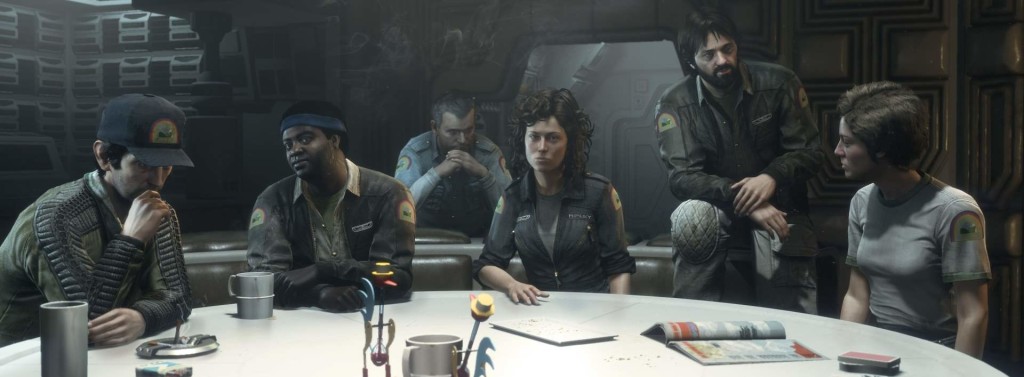
The Nostromo Edition is worth mentioning because fans of the original movie are going to love the extras. The big one is Crew Expendable, which brings the original crew and the Nostromo back into the experience. For anyone who loves the 1979 film, that’s a very cool addition. It is the kind of bonus content that hits differently because this game already feels so connected to that movie.
One preservation note, though. The PlayStation copy I looked at includes a download code for Crew Expendable, but the code expired in 2016. So if you’re buying used, do not assume that code is still going to work. The disc is still worth owning, but it’s important to know what is actually preserved physically and what was tied to a code.
Digital Is Easy, Physical Is Better
If you just want to play Alien: Isolation, the full game is usually easy to find digitally, and it’s normally available on PlayStation with a decent PS Plus discount. That’s probably the easiest way for most people to experience it, especially if you just want to turn the lights off and ruin your evening in the best possible way.
But if you’re a preservationist, I’d look for the disc on PlayStation. And if you’re a Switch collector, the Limited Run physical release is the one to track down. The Switch version is genuinely impressive, the campaign is playable offline, and having this game preserved on a cartridge is exactly the kind of thing physical media fans should care about.
Still, if you ask me the best way to play it, I’m going PlayStation, big screen, dark room, surround sound. That’s where Alien: Isolation becomes more than a game. The visuals pull you into the world of the original movie, but the sound locks the door behind you.
You are alone on the station. The lights are failing. The tracker is beeping. Something is moving above you.
A lot of horror games want to scare you. Alien: Isolation wants to hunt you, and it does.

